
From Policy to Place: How the UAE's "Year of Family" Reshapes Social Value in the Built Environment
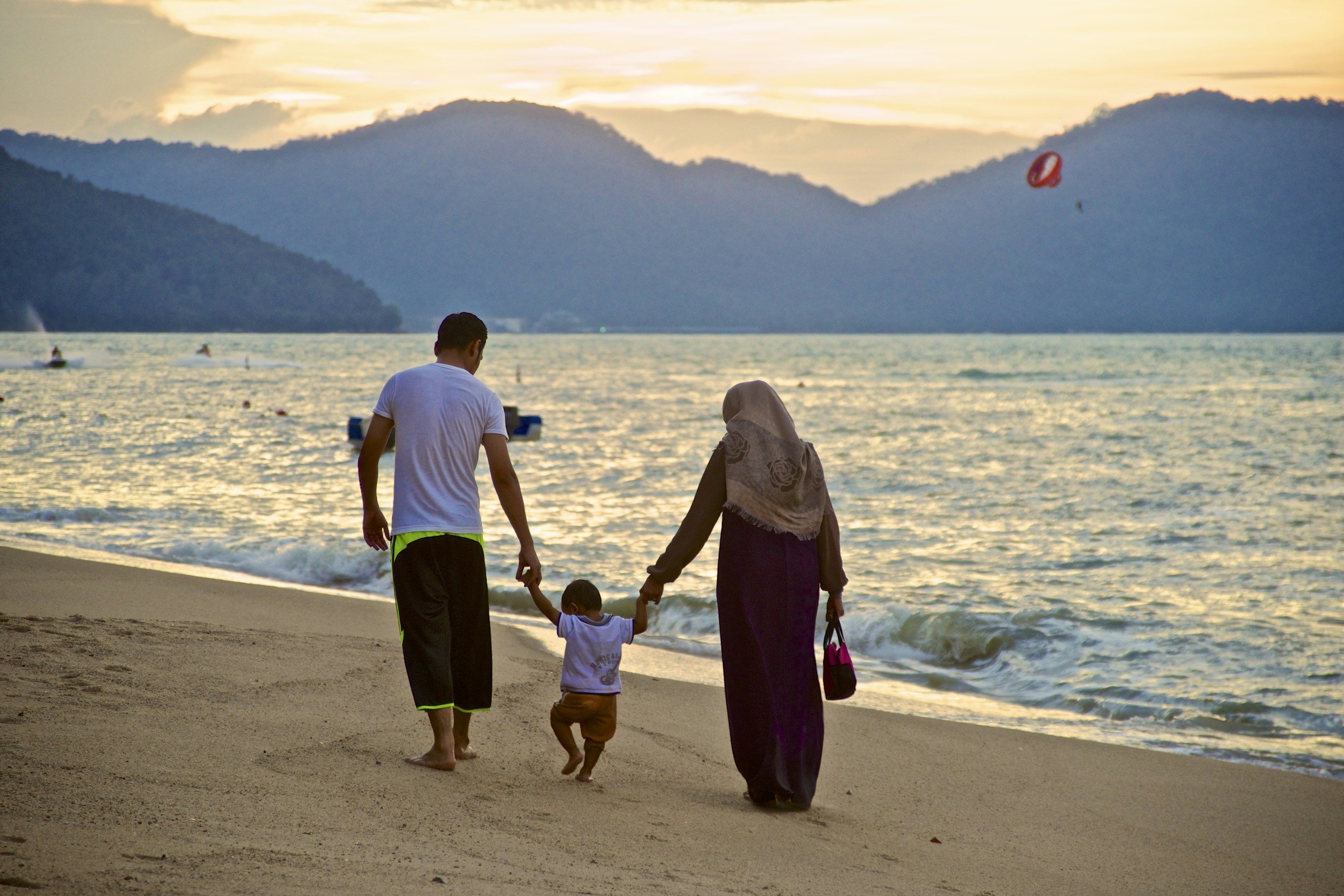
Last month, on Sunday 18 January 2026, the President of the United Arab Emirates (UAE), His Highness Sheikh Mohamed bin Zayed Al Nahyan announced 2026 to be the "Year of Family." Here, he reaffirming the UAE's commitment to supporting family bonds and shared social values as a foundation for national growth. In a message posted via social media, Sheikh Mohamed bin Zayed Al Nahyan emphasised that the initiative underscores the country's focus on enhancing unity, social cohesion, and community wellbeing.
The President’s vision of family bonds, unity, and social cohesion as foundations for national growth presents a compelling challenge for those of us working in the built environment: how can the sector support this objective in creating lasting social value and positive social impact to those living and frequenting these spaces.
Social Value Isn't Abstract - It's Built
The announcement is clear in its intentions. The Year of Family will involve programmes supporting family stability, intergenerational ties, and broader community engagement. For the developers in the UAE’s built environment and real estate sector this presents two opportunities:
Designing spaces and infrasture where the design puts people and families in the centre - enabling them to thrive.
Investing and embeding social impact initiatives and priorities into development plans. Although the return of investment has typically been the key financial motivator, increasingly, the Social Return on Investment (SROI) requires equal thought, action and implementation.
The Built Environment as Social Infrastructure
What Sheikh Mohamed describes as "investing in efforts to achieve lasting progress and development for all those who call the UAE home" also includes essential investment into social infrastructure. This brings the built environment sector into sharp focus.
Social infrastructure encompasses the physical spaces and facilities that enable social interaction, community participation, and collective wellbeing. Libraries, community centres, sports facilities, parks, and even well-designed streets all function as social infrastructure. This is what urbanist Jan Gehl calls "life between buildings" - the cafés, shaded walkways, public squares, and shared gardens where neighbours become familiar faces, and familiarity becomes connection.
The challenge for developers, architects, urban planners, and construction professionals is this: how do we embed social value into projects from conception through to long-term management? How do we move beyond compliance-based approaches to genuinely creating places that strengthen the social fabric? And finally, how can the UAE’s real estate and built environment sector begin to social outcomes in an already thriving construction industry.
Measuring What Matters
The Year of Family provides clear priorities against which social value can be assessed. Rather than generic metrics, we can now ask specific questions:
Does this development strengthen or weaken family bonds? Does it deepen social and community, does it address social needs.
Practical Applications
Several approaches can help translate the Year of Family's objectives into built environment practice:
Co-design with families. Genuine consultation with diverse family structures—single parents, multigenerational households, blended families—reveals needs that desk-based planning misses. What do working parents actually need from their neighborhood? What enables elderly family members to remain independent while staying connected?
Design for flexible use. Spaces that can accommodate different activities and user groups simultaneously support the kind of organic social mixing that builds community. A plaza that works for elderly morning walkers, lunchtime office workers, afternoon school children, and evening families achieves more social value than one optimized for a single use.
Create invitation, not just provision. Building a community center doesn't automatically create community. The design must invite use—through visibility, accessibility, welcoming entrances, flexible spaces, and thoughtful programming that brings different community members into contact.
Beyond the Year
While 2026 is designated the Year of Family, the built environment decisions we make this year will shape family life for decades. Buildings last. Neighborhoods endure. Infrastructure investments lock in patterns of living that are difficult and expensive to reverse.
This gives the initiative particular weight. It's not just about one year of programming and campaigns. It's an opportunity to fundamentally reorient how we approach development and placemaking, ensuring that social values aren't add-ons or afterthoughts but core design drivers.
The country’s commitment to "work in partnership with families and the broader community" suggests a collaborative approach that the built environment sector should embrace. We're not just building for communities- we should be building with them.
A Question of Alignment
For built environment professionals working in or with the UAE, the Year of Family poses a direct question: do your current projects align with these stated national priorities? Can you demonstrate how your work strengthens family bonds, enables intergenerational connection, and builds social cohesion, and finally how is your organisation measuring or consider the social impact and can these be embedded into current projects and future decisions?
If the answer isn't immediately clear, that's valuable information. It suggests an opportunity to reexamine how social value is understood, measured, and delivered in your work.
The announcement reminds us that buildings, infrastructure, and public spaces aren't neutral containers for life—they actively shape how we live together. When national leadership articulates clear social priorities, the built environment sector has both an opportunity and an obligation to respond.
Social value, should be something integrated into projects as opposed to being simply being an add on of after though. Significantly, it should be something we build into them, one design decision at a time. The Year of Family makes visible what should always be true: spaces should create opportunities to enhance social connection and the real estate and build environment sector has the opportunity to build beyond simply the project but create opportunities for social investment the generates last return, even after the development or project has finished.
It requires thinking creatively, undertdnig the needs and nuances of communities, and families partnering to create meaningful change and impacts.
